
The CMS market in 2020 played a critical role in how businesses and creators adapted to rapid changes online. As websites became central to communication, sales, and operations, content management systems provided the foundation for fast deployment and ongoing management.
Rather than major disruption, the year highlighted the importance of reliability and usability. Established platforms continued to dominate, while growth trends reflected rising demand for ecommerce readiness, simplified workflows, and scalable website solutions.
This report examines CMS market share in 2020, outlining the platforms that led adoption, the key trends shaping the market, and how changing website needs influenced CMS choices during the year.
CMS Platforms Dominating the Market in 2020
The CMS market in 2020 reflected a clear shift toward hosted platforms and ease of use, while traditional open-source systems continued to serve established sites. Adoption patterns showed growing interest in ecommerce and visual website builders, alongside gradual decline for legacy CMS platforms.
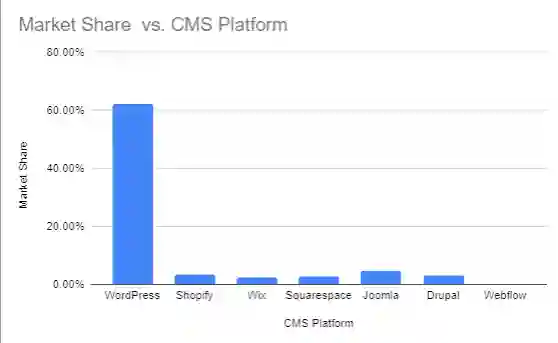
Below is a snapshot of CMS market share 2020 based on W3Techs CMS usage data:
| CMS Platform | Market Share (%) |
|---|---|
| WordPress | 62.1% |
| Shopify | 3.4% |
| Wix | 2.3% |
| Squarespace | 2.7% |
| Joomla | 4.6% |
| Drupal | 3.0% |
| Webflow | 0.2% |
| Tilda | 0.2% |
| Duda | 0.2% |
| GoDaddy Website Builder | 0.4% |
WordPress: The Clear Market Leader
Market Share: 62.1% of CMS-powered websites.
WordPress strengthened its position in 2020, continuing to dominate the CMS landscape by a wide margin. Its open-source foundation, extensive plugin ecosystem, and flexibility made it suitable for everything from personal blogs to enterprise websites.
The platform’s ability to adapt to changing content and publishing needs helped it maintain strong adoption across industries.
Shopify: Rapid Growth in eCommerce
Market Share: 3.4% of CMS-powered websites.
Shopify showed notable growth in 2020 as online selling became a priority for many businesses. Its fully hosted approach, combined with built-in payments and inventory management, made it a practical choice for merchants launching or expanding ecommerce operations.
This year marked a turning point for Shopify as ecommerce adoption accelerated globally.
Wix: Steady Rise of Website Builders
Market Share: 2.3% of CMS-powered websites.
Wix continued its steady growth in 2020, appealing to users looking for simplicity and speed. Its drag-and-drop editor and bundled hosting reduced technical barriers, making it popular with small businesses and individuals.
The platform’s focus on ease of use helped it gain ground in a competitive CMS market.
Squarespace: Design-First Platform
Market Share: 2.7% of CMS-powered websites.
Squarespace maintained a strong presence among creatives and service-based businesses in 2020. Its polished templates and controlled design environment attracted users who valued visual consistency and straightforward site management.
The platform remained a preferred choice for portfolios, personal brands, and small business websites.
Joomla: Gradual Decline of a Legacy CMS
Market Share: 4.6% of CMS-powered websites.
Joomla continued its gradual decline in 2020. While it still supported a significant number of existing sites, new adoption slowed as users migrated toward more flexible or easier-to-manage platforms.
Its presence remained strongest among long-standing projects and institutional websites.
Drupal: Enterprise-Focused but Shrinking
Market Share: 3.0% of CMS-powered websites.
Drupal retained relevance in enterprise and government environments, where security and customization were key requirements. However, overall usage declined as its complexity limited broader adoption.
The platform continued to serve specialized use cases rather than mass-market websites.
Emerging and Niche Platforms
Platforms such as Webflow, Tilda, Duda, and GoDaddy Website Builder held smaller shares in 2020. While their overall usage remained limited, they signaled early interest in visual development tools and hosted website builders that would grow in importance in later years.
Key Trends in the CMS Market in 2020
The CMS market in 2020 was shaped by sudden shifts in how businesses operated online. Website needs changed quickly, pushing platforms that offered speed, ecommerce readiness, and ease of use into stronger positions. Rather than experimentation, the year focused on practicality and rapid adoption.
Continued Dominance of Open-Source CMS Platforms
Open-source CMS platforms continued to lead the market in 2020, with WordPress strengthening its dominance. Flexibility, control over hosting, and a mature plugin ecosystem made open-source systems dependable during a period of uncertainty.
Many organizations relied on existing WordPress sites and expanded them instead of migrating to new platforms. This reinforced WordPress’s position as the default CMS for content-heavy and business websites.
Accelerated Growth of eCommerce-Focused Platforms
Ecommerce adoption accelerated sharply in 2020, driving growth for CMS platforms built specifically for online selling. Shopify saw strong gains as businesses moved quickly to digital storefronts.
Ease of setup, hosted infrastructure, and integrated payment systems made ecommerce-first CMS platforms attractive for businesses needing fast deployment without technical overhead.
Rising Popularity of All-in-One Website Builders
All-in-one website builders continued gaining traction in 2020. Platforms like Wix and Squarespace benefited from users seeking simple, bundled solutions that included hosting, design tools, and maintenance.
Small businesses, freelancers, and creators favored these platforms for their speed and low barrier to entry, especially when launching new websites under tight timelines.
Decline of Legacy CMS Platforms
Legacy CMS platforms such as Joomla and Drupal continued to see gradual declines in overall market share. While still used for established projects, new adoption slowed as alternatives offered easier management and faster development.
Complex setup and maintenance requirements made these platforms less appealing for new sites compared to more streamlined CMS options.
Early Momentum for Visual and No-Code Tools
Visual CMS platforms and no-code tools began showing early momentum in 2020. While their market share remained small, platforms like Webflow and Tilda reflected growing interest in design-led and code-light website creation.
This trend marked the early stages of a shift toward visual workflows that would become more prominent in later years.
Reliability and Ease of Management Took Priority
In 2020, reliability mattered more than innovation. Website owners prioritized CMS platforms that were stable, easy to manage, and well-supported.
Regular updates, dependable hosting options, and strong community support became key factors influencing CMS decisions during the year.
Conclusion
The CMS market in 2020 reinforced the value of stability and practical functionality. Leading platforms strengthened their positions by supporting rapid website deployment, ecommerce expansion, and easy content management.
WordPress remained the dominant CMS, benefiting from its flexibility and mature ecosystem. Ecommerce-focused platforms like Shopify experienced accelerated growth, while all-in-one website builders continued gaining traction among users seeking simplicity.
Overall, CMS adoption in 2020 reflected a shift toward dependable, easy-to-manage platforms. These trends set the foundation for continued growth in hosted solutions, ecommerce platforms, and visual CMS tools in the years that followed.