
The CMS market in 2015 had a clear leader and a long tail. WordPress powers more than half the web. Joomla and Drupal hold their ground as the developer favorites. And a new breed of hosted builders is just getting started.
This report covers CMS market share as of January 2015 using W3Techs data, looking at who leads the market and what is driving adoption right now.
CMS Market Share in January 2015
| CMS Platform | Market Share (Jan 2015) |
|---|---|
| WordPress | 60.7% |
| Joomla | 8.6% |
| Drupal | 5.1% |
| Shopify | 0.7% |
| Squarespace | 0.5% |
| Wix | 0.3% |
| Duda | 0.2% |
| GoDaddy Website Builder | 0.2% |
Top CMS Platforms in 2015
Three platforms lead the market. A handful of hosted builders are growing from a small base. Here is where each one stands right now.
WordPress
WordPress holds 60.7% of the CMS market. It powers everything from personal blogs to large publishing platforms. Its open-source model, massive plugin library, and active developer community make it the default choice for most website projects. No other platform is close.
Joomla
Joomla sits at 8.6%, making it the clear second platform in the market. Developers choose it for structured content, multi-language sites, and community platforms. It has a mature ecosystem of extensions and a loyal developer base. For complex builds that require more structure than WordPress or Joomla, it remains a solid choice.
Drupal
Drupal holds 5.1%. It is the platform of choice for enterprise websites, government portals, and large publishing operations. It demands more technical investment than WordPress or Joomla but delivers more control for teams that have the resources to use it properly.
Shopify
Shopify registers 0.7%. It is built specifically for online stores with hosted infrastructure, built-in payments, and inventory tools. The number is small, but the use case is focused. As more businesses move online, the demand for a store-first platform will only grow.
Squarespace
Squarespace holds 0.5%. It attracts creatives, photographers, and small businesses that want a well-designed site without touching code. Its controlled design system and all-in-one hosting make it a simple choice for users who value aesthetics over flexibility.
Wix
Wix sits at 0.3%. Its drag-and-drop editor and bundled hosting appeal to non-technical users who want to get online fast. It is still in its early days, but its ease of use gives it a wide potential audience among small business owners and individuals.
Duda and GoDaddy Website Builder
Both sit at 0.2%. Duda focuses on web agencies that use white-label tools. GoDaddy Website Builder leans on its existing domain and hosting customer base. Neither is a major player yet, but both have clear audiences to grow into.
Key Trends in the CMS Market
The market in 2015 is stable at the top and slowly opening up at the bottom. Three things stand out in the data right now.
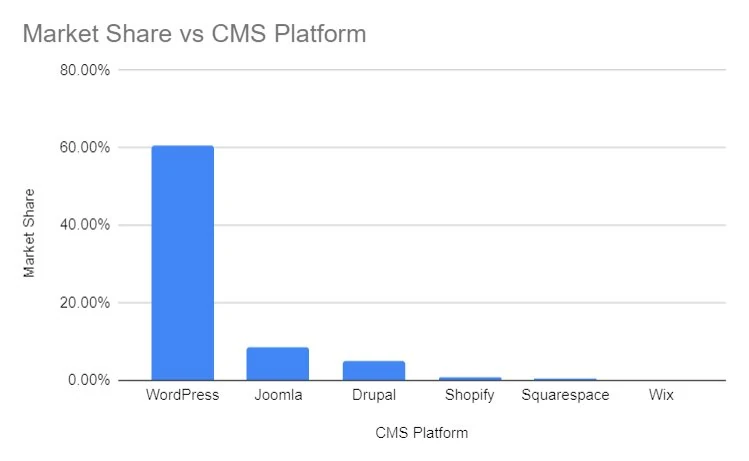
WordPress Stands Alone at the Top
The gap between WordPress at 60.7% and Joomla at 8.6% is over 50 percentage points. No platform is positioned to close that gap in the near term. WordPress keeps growing because it works for almost any use case, and its ecosystem makes it easier to extend than to replace.
Joomla and Drupal are Under Quiet Pressure
Together, they hold just over 13% of the market. Both require more technical knowledge to manage than WordPress, and neither has made serious moves to become more accessible to non-developers. If WordPress keeps simplifying and hosted builders keep improving, both platforms will feel that pressure over time.
Hosted Builders Are Small but Pointed in the Right Direction
Shopify, Wix, Squarespace, and Duda together account for less than 2% of the market. The numbers are small, but each platform has a clear use case and a specific audience. Non-technical users, small businesses, and online stores are all underserved by the current market leaders. That gap is exactly where these platforms are building.
Conclusion
In 2015, the CMS market was WordPress’s market. Joomla and Drupal are credible options for developers and enterprises, but neither is growing. The more interesting story is at the bottom of the table, where hosted builders are quietly finding their audiences. The foundations being laid right now will shape how this market looks in the years ahead.